What is laser cleaning?
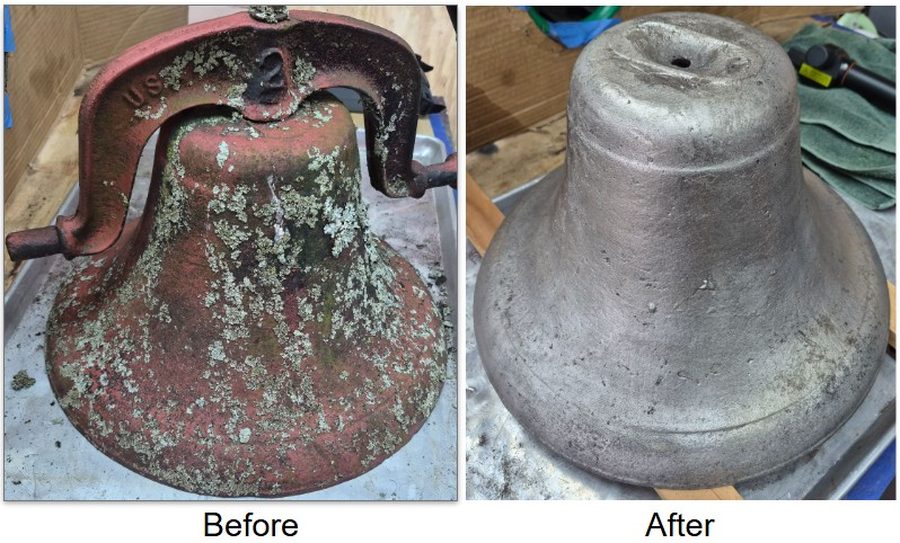
A laser cleaner delivers focused energy to a surface, breaking the bond between the base material and a contaminant like rust, oil, stains, or coatings. Thin contaminants vaporize instantly; thicker coatings like paint soften and lift away with a light pass of a brush or scraper.
Why choose laser cleaning?
Non-contact — undisturbed surfaces, ideal for carvings, molds, and detailed profiles where blasting or sanding would erode or scratch.
Environmentally friendly — nothing to dispose of but the dust removed from the part; no chemicals or spent blasting media.
No disassembly needed — most parts can be cleaned in place, with nothing abrasive left behind to reach bearings or gears.
Precise and controlled — tuned to differentiate the coating from the base material, so the base is never damaged.
Nothing consumed but electricity — no chemicals, media, or dry ice, and parts are immediately ready for painting.
A laser cleaner can remove
- Rust
- Graffiti
- Oil or grease
- Natural wood finishes and stains
- Paint (some limitations)
- Mold and mildew
- Smoke deposits
Application examples
- Restoration of parts for cars, motorcycles, and collectibles
- Cleaning of industrial molds for plastic or rubber products
- Renewal of kitchen cooking utensils and appliances to a near-new look
- Stripping finishes from antique furniture, staircases, and historical woodwork
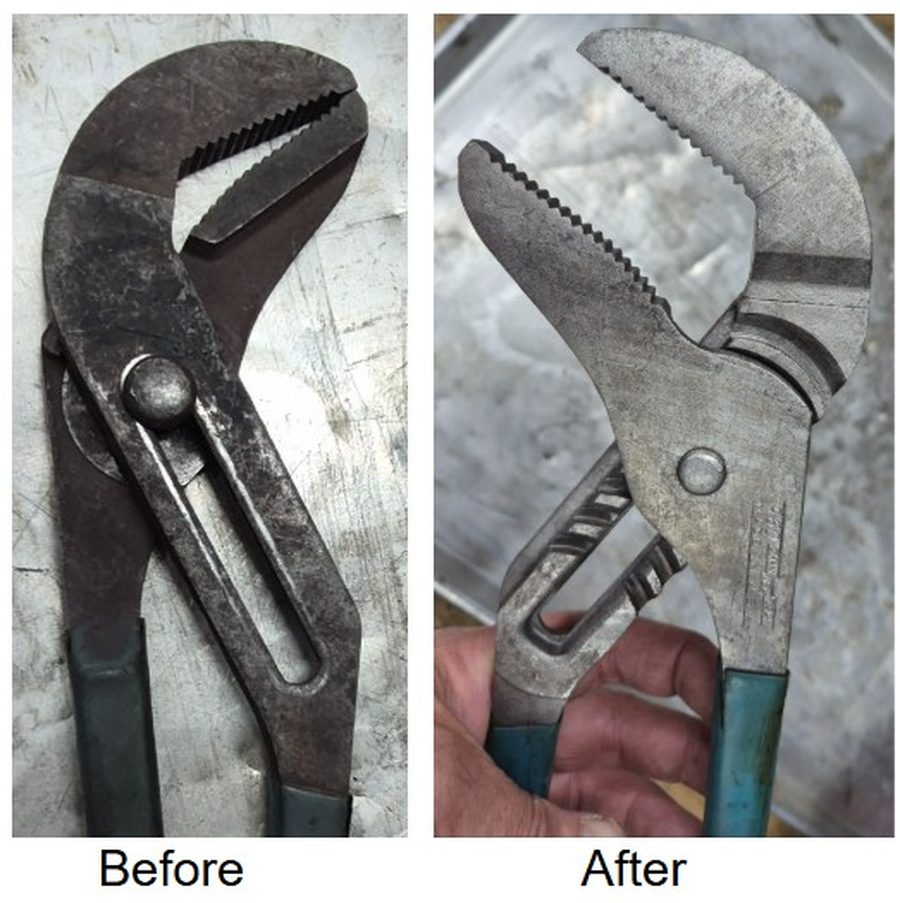
- Restoration of tools and wrenches, removing decades of oil and grease
- Cleaning oil stains from driveways or garage floors
- Preparing materials for welding, ensuring strong, contaminant-free welds